
Introduction
Cloud computing has transformed the way businesses build, deploy, and manage applications. Organizations no longer rely solely on traditional on-premises servers. Instead, they use cloud platforms such as Amazon Web Services (AWS), Microsoft Azure, and Google Cloud Platform (GCP) to create scalable, secure, and cost-effective infrastructures.
As cloud adoption continues to grow, companies require professionals who can efficiently manage cloud environments. One of the most valuable professionals in this field is the CloudOps Engineer.
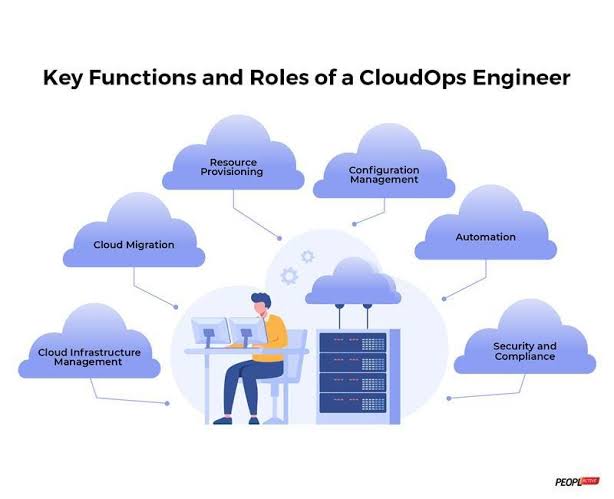
A CloudOps Engineer is responsible for ensuring that cloud infrastructure operates efficiently, securely, and reliably. They automate deployments, monitor systems, optimize cloud costs, improve security, troubleshoot issues, and collaborate with developers to maintain highly available applications.
In today’s technology-driven world, CloudOps Engineers play a critical role in digital transformation. Whether a company operates an e-commerce platform, banking application, healthcare system, gaming service, or streaming platform, CloudOps Engineers help ensure that services remain available 24/7.
This comprehensive guide explores every aspect of becoming a CloudOps Engineer, including responsibilities, required skills, tools, certifications, salary expectations, career growth, and future opportunities.
What is a CloudOps Engineer?
A CloudOps Engineer is an IT professional responsible for managing cloud-based infrastructure and operations. They ensure that cloud resources are properly configured, monitored, secured, and optimized for performance and cost.
Unlike traditional system administrators who primarily manage physical servers, CloudOps Engineers focus on cloud platforms that provide virtual machines, storage, networking, databases, and containerized services.
CloudOps combines cloud computing principles with operational excellence. It emphasizes automation, scalability, monitoring, reliability, and security.
A CloudOps Engineer typically works with cloud providers such as:
- Amazon Web Services (AWS)
- Microsoft Azure
- Google Cloud Platform (GCP)
- Oracle Cloud
- IBM Cloud
Their primary objective is to maintain reliable cloud infrastructure while supporting software development teams
Why CloudOps is Important
Modern businesses depend on cloud computing for nearly every aspect of their operations. Websites, mobile applications, enterprise software, artificial intelligence systems, and big data platforms all rely on cloud infrastructure.
Without proper cloud management, organizations may experience:
- Downtime
- Security breaches
- Poor application performance
- High operational costs
- Data loss
- Compliance violations
CloudOps Engineers prevent these problems by implementing best practices, monitoring infrastructure, and automating repetitive tasks.
Main Responsibilities of a CloudOps Engineer
CloudOps Engineers handle a wide variety of technical responsibilities.
Cloud Infrastructure Management
One of the most important duties is managing cloud infrastructure.
This includes:
- Creating virtual machines
- Configuring storage
- Managing databases
- Designing cloud networks
- Configuring load balancers
- Setting up DNS services
Infrastructure must remain stable, scalable, and highly available.
Cloud Monitoring
Monitoring is essential for maintaining system health.
CloudOps Engineers monitor:
- CPU utilization
- Memory usage
- Network traffic
- Disk performance
- Error logs
- Application response times
Monitoring tools help identify problems before users notice them.
Automation
Automation reduces human error and increases efficiency.
Common automated tasks include:
- Server provisioning
- Software deployment
- Backup scheduling
- Security updates
- Scaling infrastructure
- Configuration management
Automation allows organizations to deploy applications much faster.
Security Management
Cloud security is a major responsibility.
CloudOps Engineers implement:
- Identity management
- Multi-factor authentication
- Encryption
- Firewalls
- Security groups
- VPNs
- Access control policies
Protecting sensitive business information is always a top priority.
Cost Optimization
Cloud resources can become expensive if not managed properly.
CloudOps Engineers reduce costs by:
- Removing unused resources
- Right-sizing virtual machines
- Using reserved instances
- Scheduling non-production workloads
- Optimizing storage usage
Cost optimization helps organizations maximize return on investment.
Disaster Recovery
Unexpected failures can occur at any time.
CloudOps Engineers prepare recovery plans that include:
- Automated backups
- Cross-region replication
- Failover systems
- Database recovery
- Business continuity planning
These strategies minimize downtime during emergencies.
Essential Skills Every CloudOps Engineer Needs
A successful CloudOps Engineer requires both technical and soft skills.
Cloud Platforms
Strong knowledge of cloud providers is essential.
Popular platforms include:
- AWS
- Microsoft Azure
- Google Cloud Platform
Understanding cloud services such as EC2, S3, VPC, Lambda, Cloud Storage, Virtual Networks, and Kubernetes is highly valuable.
Linux Administration
Most cloud servers run Linux.
Important Linux skills include:
- File management
- User permissions
- Shell scripting
- Process management
- Networking
- System services
Linux expertise remains one of the most requested skills in CloudOps job descriptions.
Networking
Cloud infrastructure depends on networking.
Engineers should understand:
- TCP/IP
- DNS
- VPN
- Firewalls
- Routing
- Load balancing
- Subnets
- CIDR
- NAT
Networking knowledge helps diagnose connectivity issues quickly.
Scripting
Automation relies heavily on scripting languages.
Popular scripting languages include:
- Python
- Bash
- PowerShell
Scripting saves time and reduces manual work.
Infrastructure as Code (IaC)
Infrastructure as Code enables engineers to define infrastructure using code instead of manual configuration.
Popular IaC tools include:
- Terraform
- AWS CloudFormation
- Pulumi
- ARM Templates
IaC improves consistency and simplifies deployments.
Containerization
Containers make applications portable and scalable.
Popular container technologies include:
- Docker
- Kubernetes
- Helm
CloudOps Engineers frequently deploy and manage containerized applications.
CI/CD
Continuous Integration and Continuous Deployment improve software delivery speed.
Popular CI/CD tools include:
- Jenkins
- GitHub Actions
- GitLab CI/CD
- Azure DevOps
- CircleCI
Automated deployment pipelines reduce human errors and accelerate releases.
Monitoring Tools
CloudOps Engineers use monitoring solutions to maintain system health.
Popular tools include:
- Prometheus
- Grafana
- Datadog
- New Relic
- AWS CloudWatch
- Azure Monitor
- Google Cloud Monitoring
Monitoring enables proactive problem detection.
CloudOps Engineer vs DevOps Engineer
Although these roles share similarities, they have different focuses.
| CloudOps Engineer | DevOps Engineer |
|---|---|
| Focuses on cloud infrastructure | Focuses on software delivery |
| Manages cloud resources | Builds deployment pipelines |
| Optimizes cloud costs | Improves developer productivity |
| Maintains cloud security | Automates software delivery |
| Handles cloud monitoring | Handles application deployment |
Many organizations combine these responsibilities into a single role, especially in smaller teams.
AWS Services Used by CloudOps Engineers
AWS remains the world’s leading cloud provider.
Common AWS services include:
- EC2
- S3
- VPC
- IAM
- CloudFormation
- Lambda
- ECS
- EKS
- CloudWatch
- Route 53
- RDS
- Auto Scaling
- ELB
- Systems Manager
Understanding these services greatly increases job opportunities.
Microsoft Azure Services
Azure is widely used by enterprise organizations.
Important Azure services include:
- Azure Virtual Machines
- Azure Kubernetes Service
- Azure Storage
- Azure Monitor
- Azure Active Directory
- Azure DevOps
- Azure SQL Database
- Azure Functions
- Azure Virtual Network
Azure certifications are valuable for professionals working in Microsoft environments.
Google Cloud Platform Services
GCP offers modern cloud services optimized for analytics, AI, and Kubernetes.
Popular GCP services include:
- Compute Engine
- Cloud Storage
- BigQuery
- GKE
- Cloud Functions
- Cloud Run
- Cloud SQL
- Cloud Monitoring
Many startups choose Google Cloud because of its advanced data and AI capabilities.
10 Key Benefits of Becoming a CloudOps Engineer
- High Demand – CloudOps Engineers are in high demand as businesses continue to adopt cloud technologies.
- Excellent Salary – Professionals in CloudOps often earn competitive salaries and attractive benefits.
- Strong Career Growth – There are clear opportunities to advance into senior engineering, cloud architecture, or leadership roles.
- Work with Modern Technologies – Gain hands-on experience with AWS, Azure, Google Cloud, Kubernetes, Docker, and Terraform.
- Global Job Opportunities – CloudOps skills are valued by companies worldwide, making it easier to find remote and international jobs.
- Improved Automation Skills – Learn to automate cloud infrastructure and deployments, increasing efficiency and reducing manual work.
- Job Security – As cloud computing continues to grow, CloudOps remains a stable and future-focused career.
- Continuous Learning – Stay updated with the latest cloud technologies, certifications, and industry best practices.
- Problem-Solving Experience – Develop strong troubleshooting and analytical skills by managing real-world cloud environments.
- Opportunity to Make an Impact – Help organizations improve system performance, security, scalability, and reliability through effective cloud operations.
Frequently Asked Questions (FAQs)
1. What is a CloudOps Engineer?
A CloudOps Engineer is an IT professional responsible for managing, monitoring, securing, and optimizing cloud infrastructure. They ensure cloud environments run efficiently, remain highly available, and support business applications without interruptions.
2. What does a CloudOps Engineer do daily?
A typical day for a CloudOps Engineer includes monitoring cloud infrastructure, troubleshooting issues, automating deployments, managing servers, optimizing cloud costs, implementing security measures, and collaborating with development teams to maintain reliable applications.
3. What skills are required to become a CloudOps Engineer?
Some of the most important skills include:
- Cloud platforms (AWS, Azure, Google Cloud)
- Linux administration
- Networking
- Python or Bash scripting
- Docker
- Kubernetes
- Terraform
- CI/CD pipelines
- Monitoring and logging
- Cloud security
- Infrastructure as Code (IaC)
4. Is CloudOps different from DevOps?
Yes. CloudOps focuses on managing and optimizing cloud infrastructure, while DevOps emphasizes software development, continuous integration, and deployment. However, both roles share automation, collaboration, and operational best practices.
5. Which cloud platform should beginners learn first?
Amazon Web Services (AWS) is often the best starting point because it has the largest market share, extensive documentation, and a wide range of services. Microsoft Azure and Google Cloud Platform are also excellent choices depending on your career goals.
6. Is programming required for CloudOps Engineers?
While you don’t need to be a full-time software developer, basic programming and scripting skills are essential. Languages such as Python, Bash, and PowerShell help automate repetitive tasks and manage cloud infrastructure efficiently.
Conclusion
A CloudOps Engineer plays a vital role in managing, securing, and optimizing cloud infrastructure. With expertise in cloud platforms, automation, monitoring, and security, these professionals help businesses maintain reliable and scalable systems. As cloud adoption continues to grow, CloudOps remains a high-demand career with excellent opportunities for growth, making it an ideal choice for anyone looking to build a successful career in cloud computing.