
Introduction
In today’s digital world, organizations depend heavily on technology to manage operations, store sensitive information, communicate with customers, and deliver services. While digital transformation has created countless opportunities, it has also introduced significant cybersecurity risks. Every day, businesses face threats such as ransomware attacks, phishing campaigns, insider threats, data breaches, and software vulnerabilities.
Cybercriminals continuously search for weaknesses that allow unauthorized access to valuable information. Even a single security weakness can result in financial losses, legal penalties, damaged reputation, and loss of customer trust. Because of these growing risks, organizations must regularly evaluate the effectiveness of their security controls.
This is where Security Auditing becomes essential.
Security auditing is a systematic process of reviewing an organization’s information systems, security policies, infrastructure, applications, and operational procedures. The primary goal is to identify vulnerabilities, verify compliance with security standards, and ensure that security controls effectively protect critical assets.
Unlike a simple vulnerability scan, security auditing provides a complete evaluation of an organization’s cybersecurity posture. It examines technical controls, administrative processes, employee awareness, regulatory compliance, and overall risk management strategies.
Organizations of every size—from startups to multinational corporations—conduct security audits to improve resilience against cyber threats. Governments, healthcare providers, financial institutions, educational organizations, and cloud service providers all rely on security auditing to maintain secure operations.
As technology evolves, security auditing continues to expand beyond traditional network reviews. Modern audits include cloud environments, mobile applications, Internet of Things (IoT) devices, artificial intelligence systems, DevSecOps pipelines, and remote work infrastructure.
This comprehensive guide explains every aspect of security auditing, helping readers understand how audits work, why they matter, and how organizations can build stronger cybersecurity programs.
What Is Security Auditing?
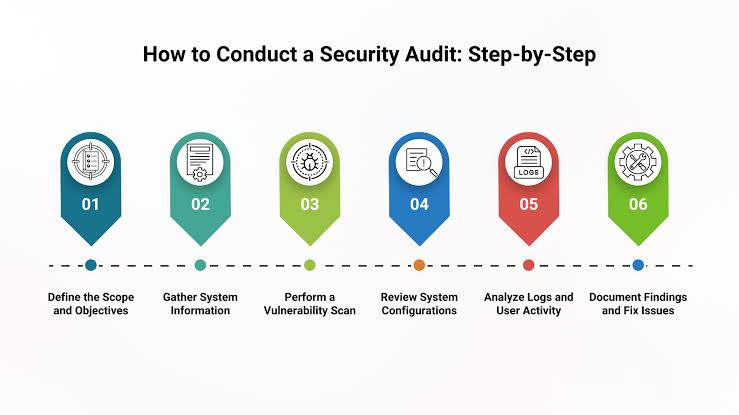
Security auditing is the structured process of evaluating an organization’s security controls, policies, systems, and procedures to determine whether they adequately protect information assets against threats.
A security audit identifies weaknesses before attackers can exploit them. It also verifies whether security controls operate as intended and whether the organization complies with industry regulations and security frameworks.
The audit process includes reviewing:
- Information security policies
- User access controls
- Network infrastructure
- Firewalls
- Servers
- Databases
- Cloud environments
- Applications
- Endpoint devices
- Backup systems
- Disaster recovery plans
- Incident response procedures
- Employee security awareness
- Physical security controls
Security auditing combines technical analysis with administrative evaluation. Auditors review system configurations, interview employees, inspect documentation, analyze logs, and perform testing to understand the organization’s overall security posture.
The final result is a detailed report that identifies risks, explains their potential impact, and recommends practical improvements.
Why Security Auditing Is Important
Cybersecurity threats continue to increase in both frequency and sophistication. Organizations can no longer assume that installing antivirus software or deploying a firewall is enough to remain secure.
Security auditing helps organizations stay ahead of attackers by providing continuous visibility into their security environment.
Some of the most important reasons organizations perform security audits include:
Protecting Sensitive Information
Businesses store valuable information including customer records, financial data, employee information, healthcare records, trade secrets, and intellectual property.
Security auditing helps ensure that these assets remain confidential, accurate, and available only to authorized users.
Identifying Vulnerabilities
Every IT environment contains weaknesses.
Examples include:
- Weak passwords
- Outdated software
- Misconfigured servers
- Unpatched operating systems
- Excessive user privileges
- Insecure cloud storage
- Open network ports
A security audit identifies these vulnerabilities before cybercriminals discover them.
Maintaining Regulatory Compliance
Many industries must comply with security regulations and standards.
Examples include:
- GDPR
- HIPAA
- PCI DSS
- ISO 27001
- SOC 2
- NIST Cybersecurity Framework
Regular audits demonstrate compliance and reduce the risk of regulatory penalties.
Reducing Financial Losses
Data breaches can cost millions of dollars through:
- Incident response
- Legal expenses
- Regulatory fines
- Customer compensation
- Business disruption
- Reputation damage
Security auditing helps reduce these risks through proactive detection and remediation.
Improving Customer Trust
Customers increasingly expect organizations to protect their personal information.
A strong security auditing program demonstrates commitment to cybersecurity and helps build long-term customer confidence.
Objectives of Security Auditing

Security auditing serves multiple strategic objectives that support an organization’s overall cybersecurity program.
These objectives include:
Identifying Security Weaknesses
The audit detects vulnerabilities across systems, applications, networks, databases, and cloud infrastructure.
Evaluating Security Controls
Auditors verify whether existing controls effectively reduce cybersecurity risks.
Measuring Compliance
Organizations must comply with various legal, contractual, and regulatory requirements.
Security audits confirm whether these requirements are being met.
Improving Risk Management
Audits provide valuable information for prioritizing security investments and reducing overall organizational risk.
Supporting Business Continuity
Security auditing evaluates backup strategies, disaster recovery plans, and incident response capabilities to ensure operational resilience.
Increasing Security Awareness
Audit findings often reveal employee training needs, leading to stronger organizational security culture.
Core Components of Security Auditing
A comprehensive security audit evaluates several key components.
Network Security
Review includes:
- Firewalls
- Routers
- Switches
- VPN configurations
- Wireless security
- Network segmentation
Identity and Access Management
Auditors examine:
- User accounts
- Password policies
- Multi-factor authentication
- Privileged access
- Role-based permissions
- Account lifecycle management
Endpoint Security
This includes:
- Desktop computers
- Laptops
- Mobile devices
- Antivirus software
- Endpoint Detection and Response (EDR)
- Device encryption
Application Security
Applications are reviewed for:
- Authentication
- Authorization
- Session management
- Secure coding practices
- Input validation
- Vulnerability management
Cloud Security
Cloud audits assess:
- IAM policies
- Storage permissions
- Virtual machines
- Containers
- Encryption
- Cloud logging
- Monitoring
Physical Security
Physical protection includes:
- Access cards
- CCTV systems
- Visitor management
- Server room controls
- Environmental monitoring
Benefits of Security Auditing
Organizations receive numerous advantages from regular security audits.
Early Detection of Risks
Finding vulnerabilities early prevents costly cyber incidents.
Stronger Compliance
Audits simplify compliance with international security standards.
Better Security Governance
Management gains clear visibility into organizational risks.
Reduced Attack Surface
Removing unnecessary services and correcting misconfigurations reduces opportunities for attackers.
Improved Operational Efficiency
Security improvements often enhance overall IT performance.
Enhanced Incident Response
Organizations become better prepared to detect and respond to cyber incidents.
Challenges in Security Auditing
Despite its importance, security auditing presents several challenges.
Rapidly Changing Threat Landscape
Cyber threats evolve faster than many organizations can update their defenses.
Complex IT Environments
Hybrid cloud, remote work, mobile devices, and IoT systems increase audit complexity.
Limited Security Budgets
Small organizations may struggle to perform comprehensive audits.
Shortage of Skilled Professionals
Qualified cybersecurity auditors remain in high demand worldwide.
Regulatory Complexity
Organizations operating internationally must comply with multiple regulations simultaneously.
Security Auditing vs. Security Assessment
Although these terms are often used interchangeably, they have different purposes.
| Security Auditing | Security Assessment |
|---|---|
| Formal evaluation | General review |
| Compliance focused | Risk focused |
| Evidence-based | Improvement-oriented |
| Conducted using standards | Flexible methodology |
| Produces audit report | Produces assessment report |
Security Auditing vs. Penetration Testing
- Security auditing and penetration testing complement each other.
- A security audit reviews policies, procedures, configurations, and compliance across the organization.
- Penetration testing simulates real-world attacks to determine whether vulnerabilities can actually be exploited.
- Organizations benefit most when they combine both approaches as part of a comprehensive cybersecurity program.
Frequently Asked Questions (FAQs) About Security Auditing
1. What is security auditing?
Security auditing is the process of evaluating an organization’s IT systems, networks, applications, and security policies to identify vulnerabilities, verify compliance with security standards, and ensure that existing security controls effectively protect sensitive information.
2. Why is security auditing important?
Security auditing helps organizations detect security weaknesses before attackers exploit them. It also improves regulatory compliance, protects sensitive data, reduces cyber risks, enhances customer trust, and strengthens the overall cybersecurity posture.
3. How often should a security audit be performed?
Most organizations should conduct a comprehensive security audit at least once a year. However, businesses operating in highly regulated industries or those experiencing significant infrastructure changes may need quarterly or continuous security audits.
4. What are the different types of security audits?
Common types of security audits include:
- Information Security Audit
- Network Security Audit
- Cloud Security Audit
- Application Security Audit
- Database Security Audit
- Physical Security Audit
- Compliance Audit
- Wireless Security Audit
- Endpoint Security Audit
- Third-Party Security Audit
5. What is included in a security audit?
A security audit typically reviews:
- Security policies and procedures
- User access controls
- Firewalls and network devices
- Servers and workstations
- Cloud infrastructure
- Applications and databases
- Backup and disaster recovery systems
- Incident response plans
- Compliance with industry regulations
6. What is the difference between a security audit and a vulnerability assessment?
A security audit is a comprehensive review of security controls, policies, and compliance requirements. A vulnerability assessment focuses specifically on identifying technical vulnerabilities within systems and applications.
7. How is a security audit different from penetration testing?
A security audit evaluates the overall effectiveness of an organization’s security controls and compliance. Penetration testing simulates real-world cyberattacks to determine whether vulnerabilities can be exploited by attackers.
8. Who performs a security audit?
Security audits can be conducted by:
- Internal security teams
- External cybersecurity consultants
- Certified security auditors
- Independent compliance organizations
External audits often provide a more objective assessment.
9. What tools are commonly used for security auditing?
Popular security auditing tools include:
- Nessus
- OpenVAS
- Nmap
- Wireshark
- Burp Suite
- Microsoft Defender
- Splunk
- Qualys
- Rapid7 InsightVM
- CIS-CAT
10. What industries require regular security audits?
Security audits are important for almost every industry, especially:
- Healthcare
- Banking and Finance
- Government
- Education
- Retail
- Manufacturing
- Cloud Service Providers
- E-commerce
- Telecommunications
- Technology Companies
Conclusion
Security auditing is a vital process that helps organizations identify security risks, protect sensitive data, and ensure compliance with industry standards. Regular security audits improve cybersecurity, reduce the risk of cyberattacks, and strengthen overall business security. By making security auditing a continuous practice, organizations can build a safer and more reliable digital environment.