
Introduction to Artificial Intelligence
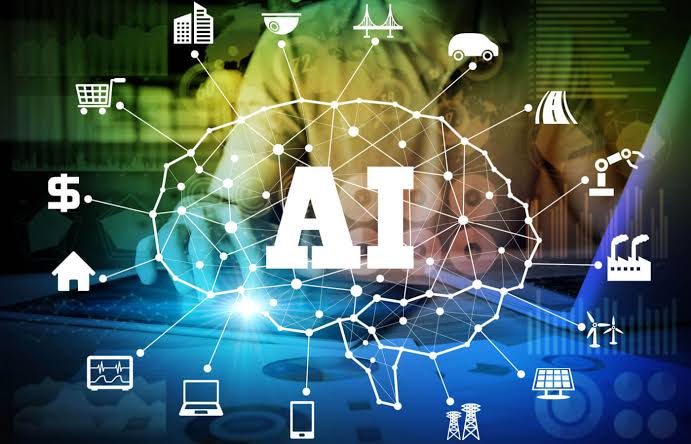
Artificial Intelligence, commonly known as AI, has become one of the most important technologies of the modern world. From smartphones and search engines to healthcare systems and self-driving vehicles, artificial intelligence is changing the way people live, work, and communicate. What was once considered a concept from science fiction has now become a powerful reality that influences almost every industry.
Artificial Intelligence allows machines and computer systems to perform tasks that normally require human intelligence. These tasks include learning from experience, understanding language, recognizing images, solving problems, making decisions, and even creating new content. As technology continues to advance, AI is becoming more capable, accessible, and useful for individuals, businesses, and organizations around the world.
The growth of artificial intelligence has created new opportunities in areas such as healthcare, education, finance, transportation, entertainment, and scientific research. Companies are using AI to improve efficiency, reduce costs, understand customers, and develop innovative products. At the same time, researchers and experts are exploring ways to make AI safer, more ethical, and beneficial for society.
This complete guide explains what artificial intelligence is, how it works, its history, different types, applications, advantages, challenges, and what the future may look like.
What Is Artificial Intelligence?
Artificial Intelligence is a branch of computer science that focuses on creating machines and software capable of performing tasks that usually require human intelligence. In simple words, AI enables computers to think, learn, and make decisions in a way that resembles human abilities.
Traditional computer programs follow fixed instructions written by developers. Artificial intelligence systems, however, can analyze data, identify patterns, and improve their performance over time without needing every step to be manually programmed.
For example, when a smartphone recognizes a person’s face to unlock the device, that technology uses artificial intelligence. When a streaming platform recommends movies based on viewing habits, AI algorithms analyze user behavior to make predictions. When a virtual assistant answers questions or understands voice commands, artificial intelligence is working behind the scenes.
AI does not mean that machines have human emotions or consciousness. Instead, it refers to advanced computer systems designed to imitate certain aspects of human intelligence.

Why Is Artificial Intelligence Important?
Artificial Intelligence has become important because it helps solve complex problems faster and more efficiently than traditional methods. Modern society generates massive amounts of information every day, and AI systems can process and analyze this data within seconds.
Some major reasons why artificial intelligence is important include:
1. Faster Decision Making
AI systems can analyze large amounts of information quickly and provide insights that help people make better decisions. Businesses use AI analytics to understand market trends, customer preferences, and future opportunities.
2. Automation of Repetitive Tasks
Artificial intelligence can handle repetitive and time-consuming activities, allowing humans to focus on more creative and strategic work. Many industries use AI-powered automation to improve productivity.
3. Better Accuracy
AI technology can reduce human errors in many fields. For example, AI-powered medical systems can help doctors detect certain diseases by analyzing medical images and patient data.
4. Innovation and New Discoveries
Artificial intelligence supports research and development by helping scientists discover new medicines, study climate patterns, and explore new technologies.
The History of Artificial Intelligence
The idea of creating intelligent machines has existed for many decades. Although modern AI has developed rapidly in recent years, its foundation was built through decades of research and experimentation.
Early Concepts of AI
The concept of artificial intelligence began gaining attention during the 20th century. Scientists and mathematicians started exploring whether machines could simulate human thinking.
One of the most influential figures in early AI research was British mathematician and computer scientist Alan Turing. He introduced the idea that machines could potentially demonstrate intelligent behavior. His famous “Turing Test” became an important concept in discussions about machine intelligence.
The Birth of AI as a Field
The term “Artificial Intelligence” was officially introduced in 1956 during the Dartmouth Conference, where researchers gathered to discuss the possibility of creating machines that could think and learn.
During the early years, scientists were optimistic about AI development. They created programs that could solve mathematical problems, play games, and perform basic reasoning tasks.
AI Development Challenges
Despite early progress, artificial intelligence faced many challenges. Computers had limited processing power, available data was scarce, and researchers struggled to create systems that could understand real-world complexity.
These difficulties led to periods known as “AI winters,” when interest and funding for AI research decreased.
The Modern AI Revolution
In recent years, artificial intelligence has experienced rapid growth due to improvements in computing power, availability of large datasets, and advances in machine learning.
Technologies such as deep learning, neural networks, and natural language processing have allowed AI systems to perform tasks that were previously impossible.
Today, AI is used by millions of people through applications such as voice assistants, recommendation systems, translation tools, and intelligent software.
How Artificial Intelligence Works and Different Types of AI
How Does Artificial Intelligence Work?

Artificial Intelligence works by combining large amounts of data, advanced algorithms, and powerful computing systems. Unlike traditional software that only follows pre-written instructions, AI systems can learn from information, recognize patterns, and improve their performance over time.
The process of artificial intelligence usually involves three main components:
- Data
- Algorithms
- Computing Power
Together, these elements allow machines to analyze information and perform intelligent tasks.
1. Data: The Foundation of Artificial Intelligence
Data is the most important resource for artificial intelligence. AI systems learn by studying large amounts of information. This information can include text, images, videos, audio recordings, numbers, and user behavior.
For example, an AI system designed to recognize cats in pictures needs thousands or millions of images of cats to learn their features. By analyzing these examples, the system learns patterns that help it identify cats in new images.
Businesses collect data from different sources, including websites, mobile applications, customer interactions, and online platforms. AI uses this information to understand trends and make predictions.
The quality of data directly affects the performance of an AI system. Clean, accurate, and well-organized data helps artificial intelligence produce better results.
2. Algorithms: The Brain Behind AI
Algorithms are sets of instructions that allow AI systems to process information and make decisions. They help machines identify patterns, solve problems, and complete specific tasks.
Machine learning algorithms are especially important because they allow computers to learn from experience. Instead of programmers explaining every possible situation, machine learning systems discover patterns by analyzing examples.
For instance, an email service can use AI algorithms to identify spam messages. The system studies thousands of emails and learns which characteristics are commonly found in unwanted messages.
3. Computing Power: Making AI Possible
Modern artificial intelligence requires powerful computers to process large amounts of information quickly.
Advancements in computer hardware, cloud computing, and specialized processors have made it possible to develop advanced AI systems.
Today, companies and researchers use powerful computer systems to train complex AI models that can understand language, generate images, analyze medical data, and perform many other advanced tasks.
The Learning Process of Artificial Intelligence
AI systems learn through different methods. The most common learning approaches include:
Machine Learning
Machine Learning is a major part of artificial intelligence that allows computers to learn from data without being directly programmed for every task.
A machine learning system receives data, identifies patterns, and uses those patterns to make predictions or decisions.
Examples of machine learning include:
- Product recommendations on shopping websites
- Fraud detection in banking
- Voice recognition systems
- Weather prediction models
Deep Learning
Deep Learning is an advanced form of machine learning that uses artificial neural networks inspired by the human brain.
Deep learning systems contain multiple layers that process information and improve their understanding gradually.
Deep learning is responsible for many recent AI breakthroughs, including:
- Advanced image recognition
- Speech understanding
- Language translation
- Autonomous driving technology
- AI content generation
Types of Artificial Intelligence
Artificial Intelligence can be divided into different categories based on its abilities and functions.
The main types of AI include:
- Narrow Artificial Intelligence
- General Artificial Intelligence
- Super Artificial Intelligence
1. Narrow Artificial Intelligence (Weak AI)
Narrow AI is the type of artificial intelligence that exists today. It is designed to perform specific tasks and operate within a limited area.
Although narrow AI can perform certain tasks extremely well, it does not have general human-like intelligence.
Examples of narrow AI include:
- Voice assistants
- Recommendation systems
- Face recognition software
- Online chatbots
- Navigation applications
A voice assistant can answer questions, set reminders, and control smart devices, but it does not truly understand the world like a human.
2. Artificial General Intelligence (AGI)
Artificial General Intelligence refers to a theoretical form of AI that would have human-level intelligence.
An AGI system would be capable of understanding, learning, and applying knowledge across different areas, similar to a human being.
For example, a human can learn mathematics, cook food, communicate in languages, and solve new problems. A true AGI system would theoretically have similar flexibility.
Currently, artificial general intelligence has not been achieved. Researchers continue to study how such systems could be developed safely.
3. Artificial Super Intelligence (ASI)
Artificial Super Intelligence is a hypothetical concept where AI becomes more intelligent than humans in almost every area.
A super intelligent system would theoretically be capable of solving extremely complex problems, making advanced discoveries, and improving its own abilities.
While ASI is often discussed in science fiction and future technology discussions, it does not currently exist.
Different Categories of AI Based on Functionality
Artificial intelligence can also be classified based on how systems operate.
Reactive Machines
Reactive machines are basic AI systems that respond only to current situations. They do not store memories or learn from past experiences.
An example is a chess-playing AI system that analyzes the current game position and chooses the best move.
Limited Memory AI
Limited memory AI can use previous information to improve decisions.
Most modern AI applications fall into this category.
Examples include:
- Self-driving vehicles
- Customer service systems
- Recommendation engines
These systems analyze previous data to make better predictions.
Theory of Mind AI
Theory of Mind AI is a future concept where machines would understand human emotions, beliefs, and intentions.
Researchers are exploring this area, but practical development is still in the early stages.
Self-Aware AI
Self-aware AI is a theoretical concept where machines would have consciousness and awareness similar to humans.
Currently, no such artificial intelligence exists.
Machine Learning: The Heart of Modern AI
Machine learning is one of the most important technologies behind artificial intelligence. It allows computers to improve automatically through experience.
Instead of following fixed instructions, machine learning systems analyze examples and develop their own understanding.
There are three main types of machine learning:
Supervised Learning
Supervised learning uses labeled data to train AI systems.
For example, if an AI system is given thousands of pictures labeled as “dog” and “cat,” it learns the differences between them and can classify new images.
Applications include:
- Medical diagnosis
- Image classification
- Email filtering
Unsupervised Learning
Unsupervised learning allows AI to discover patterns in data without predefined labels.
It is commonly used for:
- Customer segmentation
- Market research
- Data analysis
Reinforcement Learning
Reinforcement learning allows AI systems to learn through rewards and penalties.
The system tries different actions and learns which choices produce better results.
This approach is used in:
- Robotics
- Gaming AI
- Automated decision systems
Natural Language Processing (NLP)
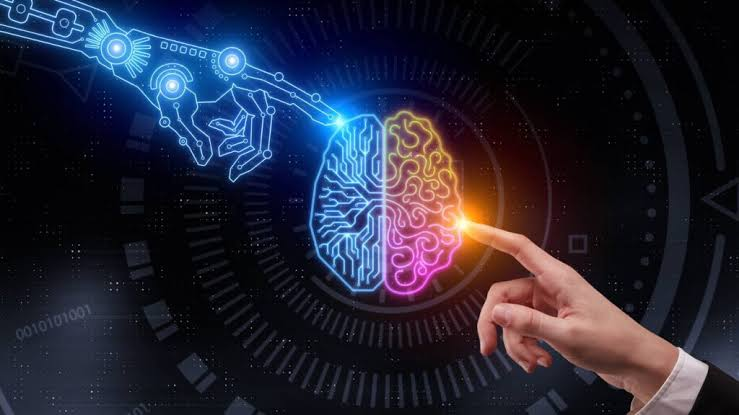
Natural Language Processing is a branch of AI that focuses on helping computers understand and communicate using human language.
NLP allows machines to:
- Understand text
- Translate languages
- Recognize speech
- Generate written content
- Analyze emotions in messages
Examples of NLP technology include:
- Translation applications
- AI chat assistants
- Voice-controlled devices
- Customer support bots
NLP has transformed communication between humans and machines by making technology easier to use.
Frequently Asked Questions (FAQs) About Artificial Intelligence
1. What is Artificial Intelligence?
Artificial Intelligence is a technology that enables machines and computer systems to perform tasks that usually require human intelligence, such as learning, problem-solving, language understanding, and decision-making.
2. How is Artificial Intelligence used in daily life?
AI is used in many everyday applications, including voice assistants, search engines, online recommendations, smartphone features, navigation apps, smart home devices, and customer service chatbots.
3. Is Artificial Intelligence replacing human jobs?
Artificial Intelligence may automate some repetitive tasks, but it also creates new job opportunities in technology, research, data analysis, and AI management. Human skills like creativity and critical thinking remain important.
4. What are the main benefits of Artificial Intelligence?
The main benefits of AI include faster decision-making, improved accuracy, automation of repetitive tasks, better data analysis, and support for innovation in different industries.
5. What is the future of Artificial Intelligence?
The future of Artificial Intelligence is expected to bring more advanced technologies in healthcare, education, transportation, and business. Researchers are focusing on making AI more useful, safe, and responsible.
Conclusion
Artificial Intelligence has become a powerful technology that is transforming the modern world. From improving daily tasks to solving complex global problems, AI offers many opportunities for growth and innovation. As technology continues to develop, responsible use of Artificial Intelligence will help create a smarter and more efficient future for everyone.