

Introduction
The software industry has changed dramatically over the last decade. Organizations are expected to deliver new features faster, maintain stable applications, reduce downtime, and respond quickly to customer needs. Meeting these expectations requires more than skilled developers or experienced system administrators. It requires seamless collaboration between development and operations teams, and this is where a DevOps Engineer plays a vital role.
A DevOps Engineer combines software development practices with IT operations to automate workflows, improve collaboration, and accelerate software delivery. Rather than treating development and operations as separate departments, DevOps promotes a culture of shared responsibility and continuous improvement.
Today, companies ranging from startups to multinational enterprises rely on DevOps Engineers to manage cloud infrastructure, automate deployments, monitor applications, and ensure systems remain secure and highly available.
As businesses increasingly adopt cloud computing, containerization, and automation, the demand for DevOps Engineers continues to grow worldwide. Professionals with expertise in DevOps enjoy competitive salaries, excellent career opportunities, and the chance to work with cutting-edge technologies.
This guide explores every aspect of becoming a successful DevOps Engineer, from foundational concepts to advanced practices.
What Is a DevOps Engineer?
A DevOps Engineer is an IT professional responsible for improving collaboration between software developers and operations teams through automation, continuous integration, continuous deployment, infrastructure as code, monitoring, and cloud technologies.
Instead of manually deploying applications or configuring servers, DevOps Engineers automate repetitive tasks, making software delivery faster, more reliable, and less prone to human error.

Their responsibilities include:
- Building CI/CD pipelines
- Managing cloud infrastructure
- Monitoring applications
- Automating deployments
- Writing Infrastructure as Code
- Managing containers
- Improving security
- Ensuring scalability
- Troubleshooting production issues
- Collaborating across teams
The role combines technical expertise with communication and problem-solving skills.
Understanding DevOps
DevOps is more than a collection of tools.
It is a philosophy focused on collaboration, automation, continuous improvement, rapid feedback, and customer satisfaction.
Traditionally, software development followed a sequential process:
- Developers wrote code.
- Testers validated it.
- Operations teams deployed it.
This often caused delays, misunderstandings, and deployment failures.
DevOps removes these barriers by integrating all teams into one collaborative workflow.
History of DevOps
Before DevOps became popular, software development relied on lengthy release cycles. Deployments occurred only a few times each year because infrastructure management required extensive manual work.
As Agile development gained popularity, organizations could build software faster, but deployment remained slow.
This created a gap between development speed and operational capabilities.
Around 2009, the DevOps movement emerged to bridge this gap.
Since then, DevOps has evolved alongside technologies such as:
- Cloud Computing
- Docker
- Kubernetes
- Git
- Jenkins
- Terraform
- AWS
- Azure
- Google Cloud
Today, DevOps is considered a standard practice across modern software organizations.
Why Companies Need DevOps Engineers
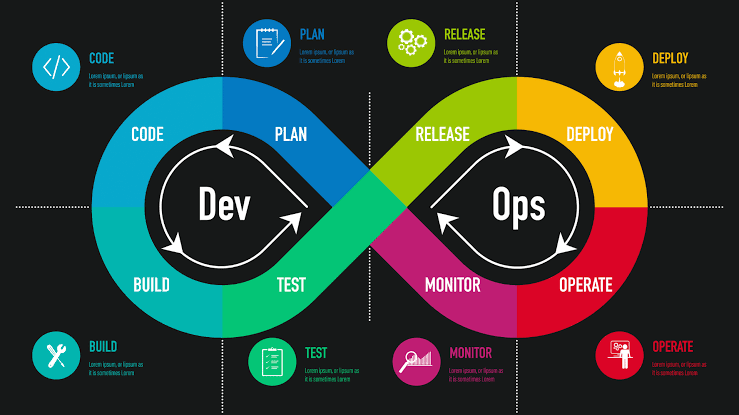
Businesses compete on software quality and speed.
Customers expect:
- Fast updates
- Reliable services
- Zero downtime
- High security
- Better performance
A DevOps Engineer helps organizations achieve these goals through automation and efficient infrastructure management.
Benefits include:
- Faster releases
- Better collaboration
- Lower operational costs
- Higher productivity
- Improved application stability
- Reduced downtime
- Automated testing
- Better customer satisfaction
Core Responsibilities of a DevOps Engineer
A DevOps Engineer performs many technical tasks throughout the software lifecycle.
Infrastructure Management
Managing servers, networks, storage, virtual machines, and cloud services.
Automation
Automating repetitive tasks reduces human errors and saves time.
Examples include:
- Server provisioning
- Software installation
- Application deployment
- Configuration management
- Backup scheduling
Continuous Integration
Developers frequently merge code changes into a shared repository.
Automated testing verifies every update.
Continuous Delivery
Applications remain deployment-ready after every successful build.
Continuous Deployment
Production deployment happens automatically without manual intervention.
Monitoring
Monitoring ensures applications remain healthy.
Metrics include:
- CPU usage
- Memory utilization
- Disk performance
- Network traffic
- Error rates
- Response time
Security
Modern DevOps integrates security into every development stage.
This approach is commonly called DevSecOps.
Essential Skills for a DevOps Engineer

Successful DevOps Engineers possess both technical and soft skills.
Linux Administration
Linux powers most cloud servers.
Engineers should understand:
- File systems
- Permissions
- Users
- Networking
- Services
- Shell scripting
Networking
Networking knowledge includes:
- DNS
- HTTP
- HTTPS
- SSH
- VPN
- Firewalls
- Load balancing
- TCP/IP
Programming
Popular programming languages include:
- Python
- Go
- Java
- Bash
- PowerShell
- JavaScript
Automation scripts simplify repetitive work.
Cloud Computing
Major cloud providers include:
- Amazon Web Services (AWS)
- Microsoft Azure
- Google Cloud Platform (GCP)
Cloud skills include:
- Compute services
- Storage
- Networking
- Identity management
- Databases
- Security
Containers
Containers package applications with their dependencies.
Popular tools include:
- Docker
- Podman
Containers ensure consistency across development, testing, and production environments.
Container Orchestration
Large applications require orchestration platforms.
Kubernetes has become the industry standard.
Features include:
- Auto scaling
- Self healing
- Rolling updates
- Service discovery
- Load balancing
Infrastructure as Code
Infrastructure should be managed like software.
Popular IaC tools include:
- Terraform
- AWS CloudFormation
- Pulumi
Benefits include:
- Version control
- Repeatability
- Faster deployments
- Reduced errors
Configuration Management
Configuration tools automate server setup.
Popular tools include:
- Ansible
- Puppet
- Chef
- SaltStack
Version Control
Git is essential.
Engineers should understand:
- Branches
- Commits
- Merge requests
- Pull requests
- Rebasing
- Conflict resolution
CI/CD
Popular CI/CD platforms include:
- Jenkins
- GitHub Actions
- GitLab CI/CD
- Azure DevOps
- CircleCI
These tools automate:
- Builds
- Testing
- Deployment
- Packaging
Monitoring
Monitoring tools include:
- Prometheus
- Grafana
- Datadog
- New Relic
- ELK Stack
Frequently Asked Questions (FAQs) About DevOps Engineer
1. What is a DevOps Engineer?
A DevOps Engineer is an IT professional who combines software development and IT operations to improve the speed, reliability, and efficiency of software delivery. They automate processes, manage infrastructure, create CI/CD pipelines, monitor applications, and help development and operations teams work together effectively.
2. What does a DevOps Engineer do?
A DevOps Engineer is responsible for:
- Building and managing CI/CD pipelines
- Automating software deployments
- Managing cloud infrastructure
- Working with containers like Docker and Kubernetes
- Monitoring application performance
- Managing servers and networks
- Improving security practices
- Troubleshooting production problems
- Supporting development teams
Their main goal is to make software delivery faster, safer, and more reliable.
3. Is DevOps a good career choice?
Yes, DevOps is considered one of the fastest-growing technology careers. Companies of all sizes need professionals who can automate processes, manage cloud systems, and improve application reliability.
DevOps Engineers often enjoy:
- High salary potential
- Strong job demand
- Opportunities to work with modern technologies
- Career growth into senior engineering and leadership roles
4. What skills are required to become a DevOps Engineer?
Important DevOps Engineer skills include:
- Linux administration
- Networking fundamentals
- Programming and scripting
- Cloud platforms
- Docker and Kubernetes
- CI/CD tools
- Infrastructure as Code
- Monitoring tools
- Security practices
- Problem-solving abilities
A combination of technical knowledge and teamwork skills is important for success.
5. Do I need coding skills to become a DevOps Engineer?
Yes, basic programming knowledge is required. DevOps Engineers usually do not write large software applications like developers, but they create automation scripts and tools.
Common languages used in DevOps include:
- Python
- Bash
- Go
- PowerShell
- JavaScript
6. How long does it take to become a DevOps Engineer?
The learning time depends on your background and dedication.
A beginner may need several months to learn fundamentals, while becoming job-ready may take 1–2 years of consistent practice.
A good learning path includes:
- Linux basics
- Networking
- Git
- Scripting
- Cloud platforms
- Docker
- Kubernetes
- CI/CD pipelines
- Infrastructure automation
- Real-world projects
7. What are the most popular DevOps tools?
Some commonly used DevOps tools are:
- Git for version control
- Jenkins for automation
- Docker for containers
- Kubernetes for orchestration
- Terraform for infrastructure management
- Ansible for configuration automation
- Prometheus and Grafana for monitoring
- AWS, Azure, and Google Cloud for cloud infrastructure
8. Is DevOps difficult to learn?
DevOps can be challenging because it covers many areas of technology, including programming, networking, cloud computing, and system administration.
However, learning step by step and practicing through real projects makes the process easier.
9. What certifications help DevOps Engineers?
Popular DevOps certifications include:
- AWS Certified DevOps Engineer
- Microsoft Azure DevOps Engineer Expert
- Google Professional Cloud DevOps Engineer
- Certified Kubernetes Administrator (CKA)
- Docker certifications
- Terraform certifications
Certifications can improve career opportunities and demonstrate technical knowledge.
Conclusion
The role of a DevOps Engineer has become one of the most important positions in modern technology companies. As organizations continue moving toward cloud-based systems, automation, and faster software delivery, skilled DevOps professionals are becoming increasingly valuable.
A DevOps Engineer is not only responsible for managing servers or deploying applications. They create bridges between development and operations teams, improve workflows, automate complex processes, and help companies deliver reliable software products.
Learning DevOps requires dedication because it combines multiple technical areas, including Linux, programming, networking, cloud computing, containers, automation, security, and monitoring. However, the effort provides excellent career opportunities and long-term growth.
The demand for DevOps Engineers continues to increase because businesses need professionals who can build scalable infrastructure, reduce failures, improve efficiency, and support digital transformation.
For anyone interested in technology, problem-solving, automation, and cloud computing, becoming a DevOps Engineer can be a rewarding career path. By developing practical skills, working on real projects, and continuously learning new technologies, professionals can build successful careers in the rapidly growing DevOps industry.