
Introduction
In today’s rapidly changing world, businesses, organizations, educators, and innovators constantly search for better ways to solve complex problems. Traditional problem-solving methods often focus only on technical solutions, costs, or efficiency. However, many modern challenges require a deeper understanding of human needs, emotions, behaviors, and experiences.
This is where Design Thinking becomes valuable.
Design Thinking is a human-centered approach to innovation that helps individuals and teams understand problems, develop creative ideas, test solutions, and create meaningful outcomes. It combines creativity, empathy, logical reasoning, and experimentation to solve problems that may not have simple answers.
From improving customer experiences to designing digital products, healthcare solutions, educational systems, and business strategies, Design Thinking has become one of the most powerful approaches used by successful organizations worldwide.
Companies, startups, and professionals use Design Thinking because it encourages people to look beyond assumptions and discover what users truly need. Instead of creating solutions based only on opinions, Design Thinking focuses on understanding real human experiences.
This comprehensive guide explains what Design Thinking is, its history, principles, stages, benefits, applications, tools, examples, and how individuals and businesses can use it effectively.
What Is Design Thinking?
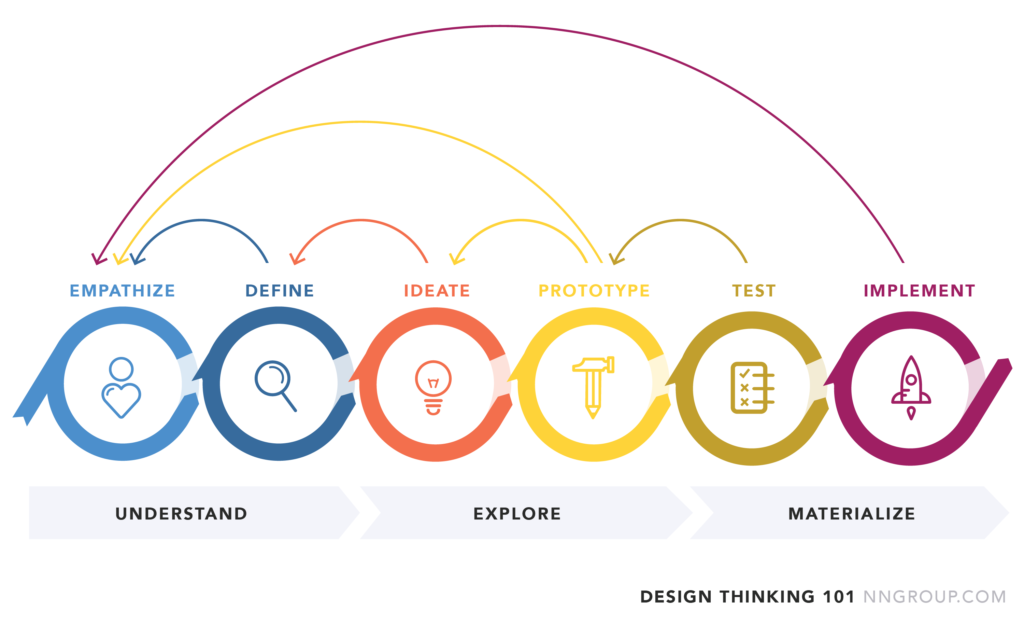
Design Thinking is a problem-solving methodology that focuses on understanding people and creating solutions based on their actual needs. It is an approach that encourages creativity, collaboration, experimentation, and continuous improvement.
At its core, Design Thinking asks an important question:
“How can we create solutions that genuinely improve people’s lives?”
Unlike traditional approaches that start with a solution and try to fit it to users, Design Thinking starts by understanding the users first.
For example, a company designing a mobile banking application may not begin by asking:
“Which features should we add?”
Instead, a Design Thinking approach begins with questions like:
- What problems do customers face while managing money?
- What makes banking difficult for different types of users?
- How do people feel when using financial services?
- What improvements would create a better experience?
By answering these questions, designers can create solutions that are more useful, accessible, and valuable.
The Meaning of Design Thinking
The term “Design Thinking” combines two important concepts:
Design
Design is not only about making things visually attractive. It is about planning and creating something that works effectively for a specific purpose.
A good design considers:
- User needs
- Functionality
- Accessibility
- Experience
- Emotional connection
Thinking
Thinking refers to the process of analyzing situations, exploring possibilities, and developing ideas.
When combined, Design Thinking means:
A creative and strategic way of thinking that helps people understand problems and design better solutions.
It is not limited to designers. Entrepreneurs, managers, teachers, engineers, marketers, healthcare professionals, and students can all use Design Thinking.
History of Design Thinking
Although the idea of human-centered design has existed for decades, the modern concept of Design Thinking became popular through design firms, universities, and innovation organizations.
The approach developed from fields such as:
- Industrial design
- Engineering
- Psychology
- Architecture
- Business innovation
One of the organizations that helped popularize Design Thinking is IDEO, a global design and consulting company known for using human-centered design methods.
Academic institutions such as Stanford University also played an important role in teaching and spreading Design Thinking through innovation programs.
Over time, businesses recognized that Design Thinking was not only useful for product design but also for solving organizational, social, and strategic challenges.
Why Is Design Thinking Important?
Modern problems are becoming more complex. Customers have changing expectations, technology evolves quickly, and organizations must adapt continuously.
Design Thinking helps because it focuses on:
1. Understanding People
Many unsuccessful products fail because companies create solutions without fully understanding users.
Design Thinking encourages researchers and designers to observe users, listen to their experiences, and identify their real challenges.
2. Encouraging Creativity
Traditional methods often limit ideas by focusing immediately on what is practical. Design Thinking creates space for brainstorming and exploring multiple possibilities.
3. Reducing Risk
Instead of investing huge amounts of money into an untested idea, teams create prototypes and gather feedback early.
4. Creating Better Experiences
Successful solutions are not only functional; they also provide positive experiences.
A product that is easy, enjoyable, and meaningful is more likely to succeed.
The Five Stages of Design Thinking
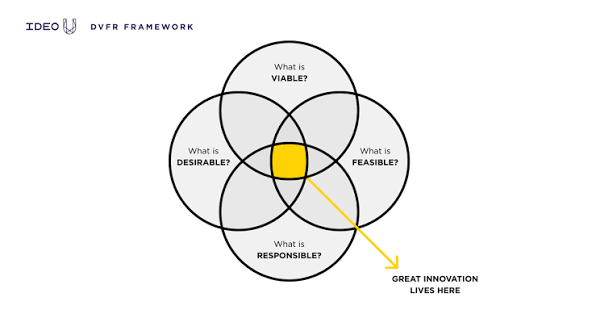
The Design Thinking process is commonly divided into five main stages:
- Empathize
- Define
- Ideate
- Prototype
- Test
These stages are not always completed in a straight line. Teams often move back and forth between stages as they learn more about the problem.
Empathize
Empathy is the foundation of Design Thinking.
The goal of this stage is to understand users deeply.
Instead of making assumptions, designers collect information by:
- Conducting interviews
- Observing user behavior
- Creating surveys
- Studying customer feedback
- Understanding emotions and challenges
For example, if a company wants to improve a hospital experience, it should not only ask doctors about problems. It should also listen to patients, families, nurses, and other people involved.
Empathy helps answer:
- What are people trying to achieve?
- What difficulties do they experience?
- What emotions influence their decisions?
- What solutions would actually help them?
Define
After collecting information, the next step is defining the actual problem.
A common mistake is solving the wrong problem.
For example:
A company may think:
“Customers need a faster website.”
After research, they may discover:
“Customers are leaving because they cannot find important information easily.”
The real problem is not speed; it is usability.
A clear problem statement guides the entire design process.
A good problem statement should be:
- Specific
- Human-centered
- Actionable
- Based on research
Ideation, Prototyping, Testing, Tools, Benefits, and Real-World Applications
Ideate — Creating Innovative Ideas
After understanding the users and defining the problem, the next stage of Design Thinking is Ideation.
Ideation is the process of generating as many possible solutions as possible. The main goal is not to find the perfect idea immediately but to explore different possibilities.
During this stage, teams focus on creativity and avoid judging ideas too quickly.
A common belief in Design Thinking is:
“The more ideas you create, the higher the chance of finding a powerful solution.”
A simple idea can often become the foundation for an innovative product or service.
Common Ideation Techniques
1. Brainstorming
Brainstorming is one of the most popular creativity techniques. Team members share ideas freely without criticism.
The purpose is to encourage open thinking and discover unexpected solutions.
Rules for effective brainstorming include:
- Encourage all ideas
- Avoid negative judgment
- Build on other people’s suggestions
- Focus on quantity before quality
2. Mind Mapping
Mind mapping helps organize thoughts visually.
A central problem is placed in the middle, and related ideas branch out from it.
For example:
Problem: Improving Online Shopping Experience
Possible branches:
- Website design
- Payment options
- Customer support
- Delivery process
- Product recommendations
Mind maps help teams discover connections between different ideas.
3. SCAMPER Method
SCAMPER is a creative thinking technique used to improve existing ideas.
It includes:
- Substitute
- Combine
- Adapt
- Modify
- Put to another use
- Eliminate
- Reverse
Businesses use this method to improve products, services, and processes.
Prototype — Turning Ideas Into Reality
A prototype is an early version of a product, service, or solution created to test an idea.
The purpose of prototyping is not perfection. The goal is learning.
A prototype allows teams to:
- Visualize ideas
- Identify problems
- Collect feedback
- Improve solutions
A prototype can be simple or advanced.
Examples include:
- Paper sketches
- Wireframes
- Interactive designs
- Product models
- Demo versions
- Role-playing experiences
Types of Prototypes
Low-Fidelity Prototypes
Low-fidelity prototypes are simple and inexpensive.
Examples:
- Hand-drawn designs
- Paper models
- Basic diagrams
They are useful during the early stages because changes can be made quickly.
High-Fidelity Prototypes
High-fidelity prototypes look and behave more like the final product.
Examples:
- Interactive mobile app designs
- Realistic website models
- Functional product samples
They are useful when testing detailed user experiences.
Test — Learning From Users
Testing is the stage where designers collect feedback from real users.
A common mistake is believing that the first solution is always the best solution.
Design Thinking accepts that mistakes and improvements are part of innovation.
During testing, teams observe:
- How users interact with the solution
- What difficulties they experience
- What features they like
- What changes are needed
The feedback helps improve the final solution.
The Design Thinking Process Is Not Linear
Many people imagine Design Thinking as a simple five-step process:
Empathize → Define → Ideate → Prototype → Test
However, real innovation does not always follow a straight path.
A team may discover new information during testing and return to the empathy stage.
For example:
A company creates a prototype for elderly users. During testing, they discover that users struggle because the text size is too small.
The team may return to research and redesign the product.
This continuous improvement makes Design Thinking powerful.
Important Design Thinking Principles
1. Human-Centered Approach
The most important principle of Design Thinking is focusing on people.
A successful solution should solve a real human problem.
Designers must understand:
- User goals
- User frustrations
- User emotions
- User environment
2. Collaboration
Design Thinking works best when people from different backgrounds work together.
A successful team may include:
- Designers
- Engineers
- Business experts
- Customers
- Researchers
- Managers
Different perspectives create stronger solutions.
3. Experimentation
Design Thinking encourages experimentation.
Instead of spending years developing an idea without feedback, teams test concepts early.
This saves:
- Time
- Money
- Resources
4. Accepting Failure as Learning
Failure is considered a valuable part of innovation.
When a prototype does not work, it provides information that helps improve future solutions.
The goal is not avoiding every mistake but learning quickly.
Popular Design Thinking Tools
Design Thinking professionals use many tools to understand users and develop solutions.
User Personas
A user persona represents a fictional version of a target customer.
It includes:
- Age
- Goals
- Challenges
- Behaviors
- Needs
Personas help teams design for real people instead of general assumptions.
Customer Journey Maps
A customer journey map shows the steps a person takes while using a product or service.
It highlights:
- Customer actions
- Feelings
- Problems
- Opportunities for improvement
For example, a bank may map the journey of someone opening a new account.
Empathy Maps
An empathy map helps teams understand what users:
- Say
- Think
- Feel
- Do
It creates a deeper understanding of customer experiences.
Storyboards
Storyboards visually describe how users interact with a solution.
They help teams imagine real-world situations.
Brainwriting
Brainwriting is similar to brainstorming, but participants write their ideas instead of speaking.
This helps quieter team members contribute.
Benefits of Design Thinking
Design Thinking provides many advantages for individuals and organizations.
Better Understanding of Customers
Companies gain deeper knowledge about customer needs and expectations.
This helps them create products people actually want.
More Creative Solutions
Design Thinking encourages creative exploration instead of depending only on traditional methods.
Improved Problem Solving
Complex problems become easier when they are broken into smaller, understandable challenges.
Faster Innovation
Testing prototypes early allows organizations to improve ideas quickly.
Reduced Business Risk
Companies can identify problems before launching expensive products.
Design Thinking in Business
Many companies use Design Thinking to improve products, services, and customer experiences.
Businesses apply it in areas such as:
- Marketing
- Product development
- Customer service
- Employee experience
- Strategy planning
A company that understands customers better can create stronger relationships and increase loyalty.
Design Thinking in Technology
Technology companies frequently use Design Thinking because digital products must be easy and enjoyable to use.
Examples include:
- Mobile applications
- Websites
- Software platforms
- Artificial intelligence systems
Technology teams use user research and testing to create products that solve real problems.
Design Thinking in Education
Schools and universities use Design Thinking to encourage creativity and critical thinking.
Students learn how to:
- Identify problems
- Research solutions
- Collaborate with others
- Create innovative ideas
It helps prepare learners for real-world challenges.
Design Thinking in Healthcare
Healthcare organizations use Design Thinking to improve patient experiences.
Applications include:
- Better hospital services
- Easier appointment systems
- Improved medical equipment
- Patient-focused care
Understanding patient needs helps create more effective healthcare solutions.
Frequently Asked Questions (FAQs) About Design Thinking
1. What is Design Thinking?
Design Thinking is a human-centered problem-solving approach that helps people understand user needs, create innovative ideas, test solutions, and improve experiences. It focuses on empathy, creativity, collaboration, and experimentation to solve complex problems effectively.
2. What are the five stages of Design Thinking?
The five main stages of Design Thinking are Empathize, Define, Ideate, Prototype, and Test. These stages help teams understand problems, develop creative solutions, build prototypes, and collect feedback for improvement.
3. Who can use Design Thinking?
Design Thinking can be used by designers, business professionals, entrepreneurs, teachers, engineers, marketers, healthcare workers, and students. Anyone who wants to solve problems creatively and develop better solutions can benefit from this approach.
4. Why is Design Thinking important for businesses?
Design Thinking helps businesses understand customers, reduce risks, improve products, and create better experiences. By focusing on real user needs, companies can develop solutions that are more valuable and successful in the market.
5. Is Design Thinking only for designers?
No, Design Thinking is not limited to designers. It is a flexible approach that can be applied in business, technology, education, healthcare, and everyday problem-solving by people from different professional backgrounds.
Conclusion
Design Thinking is a powerful approach that combines creativity, empathy, and innovation to solve real-world problems. By understanding people, testing ideas, and improving solutions, individuals and organizations can create meaningful experiences. Whether in business, technology, education, or healthcare, Design Thinking helps build smarter and more effective solutions.