
A successful product is not just about attractive visuals, modern features, or the latest technology. At its core, good product design is about understanding people and creating something that genuinely helps them. Whether you are designing a website, a mobile app, or a digital service, the best results often come from knowing who your users are, what they need, and what problems they want to solve.
It can be tempting to start a project by sketching screens, choosing colors, or thinking about exciting new features. However, without understanding the people who will use the product, even the most beautiful design can miss the mark. A product may look impressive but still feel confusing, complicated, or unnecessary to its intended audience.
This is why user understanding plays such an important role in product design. It helps designers make informed decisions, avoid common mistakes, and create experiences that feel useful and natural.
In this article, we will explore why good product design starts with understanding your users and how this approach can lead to better products.
1. Understanding Users Helps You Solve the Right Problems
One of the biggest challenges in product design is identifying the actual problem that needs to be solved. Sometimes, businesses assume they know what their customers want without taking the time to investigate their needs.
For example, imagine a company wants to improve its online shopping experience. The team might assume that adding more product recommendations will increase sales. However, after speaking with customers, they may discover that people are struggling to find product information or understand delivery costs.
In this situation, adding recommendations would not address the main problem. Improving product details and making delivery information easier to find would likely be more relevant.
Understanding users helps designers move beyond assumptions and focus on the issues that matter most.
How to apply this approach:
- Identify the main challenges your users face.
- Ask what they are trying to accomplish.
- Examine where they experience confusion or frustration.
- Review customer feedback and support requests.
- Define the problem before deciding on a solution.
When you understand the real problem, you can create a product that provides meaningful value instead of simply adding more features.
2. User Research Leads to Better Design Decisions
Good design decisions should be based on more than personal preferences or opinions. User research provides valuable information about how people behave, what they expect, and which parts of a product need improvement.
There are several ways to gather this information, depending on the project and the people you want to reach.
User interviews help you understand individual experiences in greater detail. Surveys can reveal common preferences across a larger audience. Usability testing shows where people struggle while using a product, and analytics can help identify patterns in their behavior.
For example, if users repeatedly abandon an account registration process, research may reveal that the form asks for too much information or that the instructions are unclear.
Instead of redesigning the entire website, the team can focus on simplifying registration and testing whether the changes help.
Research does not need to be complicated or expensive to be useful. Even a small number of well-planned conversations or usability sessions can reveal issues worth investigating.
The important thing is to use evidence to guide decisions rather than relying entirely on assumptions.
3. Every User Has Different Needs and Expectations
Not everyone uses a product in the same way. People have different goals, levels of experience, preferences, and accessibility needs.
A feature that feels simple to an experienced user may be confusing to someone using the product for the first time. Similarly, a layout that works well on a desktop computer may be difficult to navigate on a smartphone.
Understanding these differences helps designers create products that work for a wider range of people.
For example, a budgeting app may be used by someone who understands financial terminology as well as someone who is managing a personal budget for the first time. Clear labels, helpful explanations, and straightforward navigation can make the app more approachable for both groups.
To understand your audience better:
- Identify the different groups likely to use your product.
- Learn about their goals, behaviors, and experience levels.
- Consider accessibility and different ways of interacting with technology.
- Test your designs with people who represent your intended audience.
- Avoid assuming that your own preferences reflect everyone’s needs.
The goal is not to create a separate experience for every individual. It is to understand important differences and design an experience that serves users effectively.
4. Good Product Design Makes Everyday Tasks Easier
People generally want products that help them accomplish their goals without unnecessary effort. If an app requires too many steps to perform a simple action, users may become frustrated or look for an alternative.
Understanding how people approach everyday tasks helps designers identify opportunities to simplify the experience.
Consider a food delivery app. Users typically want to find a restaurant, choose their food, enter delivery details, and place an order. If the app makes them navigate through several unnecessary screens or repeatedly enter the same information, the experience becomes less convenient.
A user-focused design would prioritize clear navigation, understandable menus, straightforward checkout, and helpful order updates.
These improvements may not look dramatic, but they can have a meaningful impact on the overall experience.
Good product design is often about removing unnecessary obstacles. When people can complete their tasks naturally, the product feels easier to use and more valuable.
5. Understanding Users Helps You Prioritize Features
During product development, it is common for teams to generate many ideas for new features. However, adding every suggested feature can make a product complicated, expensive to maintain, and difficult to understand.
User research helps determine which features solve important problems and which ones can wait.
For example, people using a task management app may primarily need a quick way to create tasks, set deadlines, and track progress. Advanced reporting tools and complicated customization options might be useful for some users, but they may not be essential to the initial experience.
By understanding user priorities, teams can focus their time and resources on the features that provide the greatest value.
A practical way to prioritize features is to consider three questions:
- Does this feature solve a real user problem?
- How important is that problem to the intended audience?
- Is the benefit worth the development effort and complexity?
This approach helps prevent unnecessary feature additions and keeps the product focused on its main purpose.
6. User Understanding Improves the User Experience
User experience, or UX, describes how people feel when interacting with a product. It includes usability, accessibility, efficiency, clarity, and the overall impression a product creates.
A good user experience does not happen by accident. It comes from understanding what people expect and designing interactions that support those expectations.
For example, users generally expect buttons to communicate their purpose clearly, navigation menus to behave consistently, and important actions to provide feedback.
If someone submits a form, they should know whether it was successful. If an error occurs, the interface should explain what went wrong and how to fix it.
These details may seem small, but they help users feel more confident while interacting with the product.
By observing real users and understanding their expectations, designers can identify moments of confusion and make the experience more natural.
7. It Helps Create More Inclusive Products
A product should not be designed only for people who use technology in the same way as the design team. Users may have different physical abilities, visual needs, language preferences, devices, and levels of digital experience.
If these differences are ignored, a product may unintentionally exclude people who could otherwise benefit from it.
For example, low-contrast text can be difficult to read for people with visual impairments. Small buttons may be challenging to select on a touchscreen, while complex navigation can make a website harder to use with a keyboard or screen reader.
Understanding users helps designers recognize these barriers before they become larger problems.
Some practical improvements include:
- Using readable text and sufficient color contrast.
- Providing clear labels for buttons and form fields.
- Supporting keyboard navigation.
- Adding meaningful alternative text to informative images.
- Testing interfaces across different devices and access needs.
- Avoiding unnecessary complexity in important user flows.
Inclusive design benefits more than one group. Clearer instructions, easier navigation, and better readability can improve the experience for everyone.
8. It Reduces Costly Design Mistakes
Making changes late in product development can be expensive. If a team discovers that an important workflow is confusing after development is complete, fixing it may require additional design work, code changes, and testing.
Understanding users early helps identify potential problems before too much time and money have been invested in a particular solution.
For example, a team developing a booking platform might create a simple prototype of the reservation process and ask users to test it. If people struggle to select dates or understand available options, the design can be improved before the system is fully developed.
This does not mean research can eliminate every mistake. New problems may still appear after launch. However, testing assumptions early can reduce avoidable rework and help teams use their resources more effectively.
A little time spent understanding users can prevent much larger problems later.
9. It Builds Trust Between Users and Your Product
People are more likely to trust a product when it feels reliable, understandable, and respectful of their needs.
Confusing instructions, unexpected charges, unclear privacy settings, and unpredictable interactions can damage that trust. On the other hand, a product that communicates clearly and behaves consistently helps users feel more comfortable.
Consider an online service that explains its pricing before checkout, provides clear information about data collection, and confirms important actions. These details help users understand what they are agreeing to and what they can expect.
Understanding user concerns makes it easier to identify where additional clarity or reassurance is needed.
Trust should not be treated as a visual feature that can be added at the end. It is built through thoughtful decisions across the entire product experience.
10. It Encourages Continuous Improvement
User needs and expectations change over time. A product that works well today may require improvements as its audience grows, technology changes, or new problems emerge.
That is why understanding users should be an ongoing activity rather than a one-time research task.
After launching a product, teams can review customer feedback, examine usage patterns, conduct usability tests, and monitor relevant performance measures.
For example, if users frequently abandon a checkout page, the team can investigate whether the process is too long, the instructions are unclear, or a technical problem is causing difficulties.
The findings can then guide a focused improvement.
It is also important to measure whether the change actually helps. A design update should be evaluated against the original problem rather than judged only by how it looks.
Continuous learning allows products to adapt to real needs instead of remaining based on outdated assumptions.
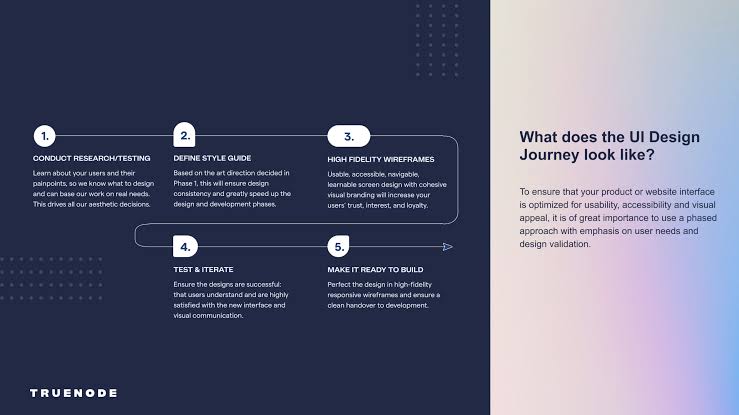
11. How to Put User Understanding Into Practice
Understanding users may sound like a large task, but you can begin with a straightforward process that works for projects of different sizes.
Step 1: Define the problem
Write down the problem you want to solve and why it matters. Be specific about what users are struggling with instead of immediately describing a feature you want to build.
Step 2: Talk to potential users
Ask people about their experiences, goals, and frustrations. Use open-ended questions that encourage them to explain what they actually do.
Step 3: Look for patterns
Review your findings and identify recurring problems. Separate evidence from assumptions, and pay attention to issues that prevent people from completing important tasks.
Step 4: Explore possible solutions
Create sketches, user flows, or simple wireframes that address the most important findings. Consider different approaches before committing to one design.
Step 5: Test your ideas
Build a prototype and ask representative users to complete realistic tasks. Observe where they struggle and collect feedback about the experience.
Step 6: Improve and measure
Make changes based on what you learn. Once the product is implemented, review relevant feedback and performance data to understand whether the solution is working.
This process can be repeated whenever you introduce a new feature or improve an existing experience.
The main principle is simple: understand the problem, test your assumptions, and let what you learn guide the design.
Conclusion
Good product design starts with understanding users because the success of a product depends on how well it meets their needs. Attractive visuals and advanced features can make a product appealing, but they cannot replace a clear understanding of the people who will use it.
User research helps designers identify real problems, prioritize useful features, simplify everyday tasks, and create more accessible experiences. It can also reduce avoidable development costs, build trust, and provide a foundation for continuous improvement.
You do not need to know everything about your audience before beginning a project. What matters is being willing to ask questions, listen carefully, test ideas, and learn from real experiences.
Before deciding what to build, take a moment to understand who you are building it for and why they need it. That simple shift in perspective can lead to better decisions throughout the design process.
Ultimately, the best products are not necessarily the ones with the most features or the most impressive interfaces. They are the ones that solve meaningful problems, fit naturally into people’s lives, and make everyday tasks easier. And that is exactly why understanding your users should always be the starting point of good product design.