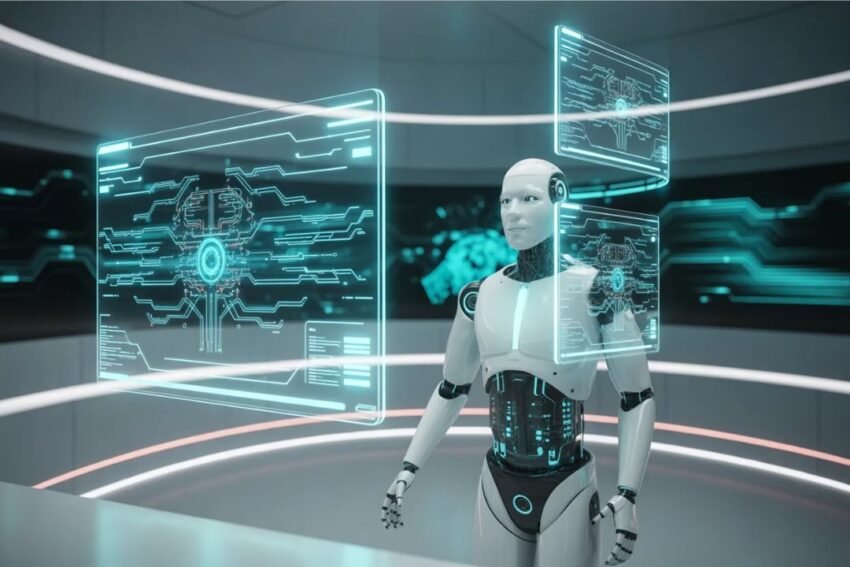
Artificial Intelligence (AI) is no longer a concept of the distant future. In 2026, AI has become an essential part of everyday life, transforming how people work, learn, communicate, and make decisions. From smart assistants and automated industries to healthcare innovations and personalized education, AI is reshaping the world faster than ever before.
The rapid growth of artificial intelligence is not only improving efficiency but also redefining human potential. As machines become more intelligent and capable, they are helping solve complex problems that were once impossible for humans alone. This article explores how AI in 2026 is changing human life forever and what the future may hold for this revolutionary technology.
What Is Artificial Intelligence?
Artificial Intelligence refers to computer systems that can perform tasks normally requiring human intelligence. These tasks include learning from data, recognizing patterns, understanding language, solving problems, and making decisions.
AI technologies are built using advanced techniques such as:
- Machine Learning (ML)
- Natural Language Processing (NLP)
- Computer Vision
- Robotics
- Deep Learning
In 2026, these technologies are being used in almost every industry, making AI one of the most powerful technological advancements in modern history.
The Rapid Growth of AI Technology
Over the last decade, AI development has accelerated dramatically. Companies, governments, and research institutions around the world are investing billions of dollars in AI innovation.
Several factors have contributed to the rapid growth of AI:
- Big Data Availability – Massive amounts of digital data allow AI systems to learn and improve.
- Improved Computing Power – Modern processors and cloud computing make complex AI models possible.
- Advanced Algorithms – New machine learning algorithms have significantly improved AI performance.
- Global Tech Investment – Major technology companies are competing to build more advanced AI systems.
Because of these developments, AI in 2026 is more powerful, accessible, and practical than ever before.
AI in Healthcare: Saving Lives with Smart Technology
One of the most impactful uses of artificial intelligence is in healthcare. AI systems are helping doctors diagnose diseases faster and more accurately than traditional methods.
Early Disease Detection
AI-powered diagnostic tools can analyze medical images such as X-rays, MRIs, and CT scans to detect diseases like cancer at early stages. Early detection significantly increases survival rates and allows doctors to begin treatment sooner.
Personalized Treatment
AI can analyze patient data, medical history, genetics, and lifestyle to create personalized treatment plans. This ensures that patients receive the most effective treatments for their specific conditions.
Robotic Surgery
Advanced AI-powered robots assist surgeons during complex procedures. These systems improve precision, reduce surgical errors, and shorten recovery times.
Drug Discovery
Pharmaceutical companies are using AI to discover new medicines faster than ever before. AI models can analyze millions of chemical compounds in a short time, accelerating the development of life-saving drugs.
AI in Education: Transforming the Way We Learn
Artificial intelligence is revolutionizing education by creating smarter and more personalized learning experiences.
Personalized Learning
AI-powered learning platforms analyze student performance and adapt lessons according to individual needs. Students who struggle with certain topics receive extra practice, while advanced learners can move ahead faster.
Virtual Tutors
AI tutors are available 24/7 to help students with homework, answer questions, and explain complex topics in simple ways.
Automated Grading
Teachers can save time through AI systems that automatically grade assignments, quizzes, and exams. This allows educators to focus more on teaching and mentoring students.
Global Access to Education
AI-powered platforms are making high-quality education accessible to people around the world, including remote and underdeveloped areas.
AI in Business and Industry
Businesses are rapidly adopting artificial intelligence to increase productivity, reduce costs, and improve decision-making.
Smart Automation
AI-driven automation is transforming industries such as manufacturing, logistics, and customer service. Machines can now perform repetitive tasks more efficiently than humans.
Data-Driven Decisions
AI systems analyze massive amounts of business data to identify trends, predict market changes, and recommend strategic decisions.
Customer Experience
Companies use AI chatbots and recommendation systems to provide personalized customer experiences. Online platforms can suggest products based on user behavior and preferences.
Fraud Detection
Banks and financial institutions rely on AI to detect suspicious activities and prevent fraud. AI systems can analyze thousands of transactions per second and identify unusual patterns.
AI in Transportation: The Future of Smart Mobility
Artificial intelligence is revolutionizing transportation systems worldwide.
Self-Driving Vehicles
Autonomous vehicles powered by AI are becoming more advanced each year. These vehicles use sensors, cameras, and machine learning algorithms to navigate roads safely.
Self-driving technology has the potential to:
- Reduce traffic accidents
- Improve road safety
- Lower transportation costs
- Increase mobility for elderly and disabled individuals
Smart Traffic Management
Cities are using AI to manage traffic flow and reduce congestion. Smart traffic lights can adjust their timing based on real-time traffic data.
Predictive Maintenance
AI systems monitor vehicles and transportation infrastructure to predict maintenance needs before problems occur.
AI in Daily Life
Many people interact with artificial intelligence multiple times every day without even realizing it.
Examples include:
- Voice assistants
- Smart home devices
- Streaming recommendations
- Online search engines
- Navigation apps
- Social media algorithms
AI helps automate tasks, provide useful recommendations, and make everyday life more convenient.
The Role of AI in Environmental Protection
Artificial intelligence is also helping address some of the world’s biggest environmental challenges.
Climate Change Monitoring
AI models analyze climate data to predict weather patterns and monitor environmental changes.
Wildlife Conservation
AI-powered cameras and drones help track endangered animals and prevent illegal poaching.
Smart Energy Systems
AI optimizes energy usage in homes, businesses, and cities. Smart grids reduce energy waste and improve the efficiency of renewable energy sources.
Ethical Challenges and Concerns
Despite its many benefits, artificial intelligence also raises important ethical and social concerns.
Job Displacement
Automation may replace certain jobs, particularly those involving repetitive tasks. However, AI is also expected to create new career opportunities in technology, data science, and AI management.
Data Privacy
AI systems rely heavily on data, which raises concerns about how personal information is collected and used.
Bias in AI Systems
If AI models are trained on biased data, they may produce unfair outcomes. Ensuring fairness and transparency in AI systems is an important challenge.
Regulation and Governance
Governments around the world are developing policies and regulations to ensure AI technologies are used responsibly and ethically.
The Future of Artificial Intelligence
The future of AI looks incredibly promising. Experts predict that AI will continue evolving and integrating into nearly every aspect of society.
Some potential future developments include:
- More advanced human-like AI assistants
- AI-powered scientific discoveries
- Fully autonomous transportation systems
- Smart cities powered entirely by AI technology
- Breakthroughs in medicine and biotechnology
As AI systems become more sophisticated, the collaboration between humans and machines will likely become the key to solving global challenges.
Conclusion
Artificial Intelligence in 2026 is transforming human life in ways that were once only imagined in science fiction. From healthcare and education to business, transportation, and environmental protection, AI is improving efficiency, accuracy, and accessibility across countless industries.
While challenges such as job displacement and data privacy must be addressed, the potential benefits of AI are enormous. By using artificial intelligence responsibly and ethically, humanity can unlock new opportunities for innovation, economic growth, and global progress.
The AI revolution has already begun, and its impact will continue to shape the future of human civilization for generations to come.